This case study is protected
Enter the password to view this work.
Incorrect password. Try again.
Don't have the password? Request access
Mirebalais Hospital
Designing digital healthcare for and with the people of Haiti
My most meaningful project to date. Three months into the project, I was brought in to fix the UX problems the team was encountering. Working alongside Partners in Health, OpenMRS, and ThoughtWorks, I helped design a medical records system for Haiti's largest hospital, serving 3 million people. The design changes were so impactful they were later rolled out to OpenMRS globally.

Situation
Haiti in 2012 was the poorest country in the Americas. The 2010 earthquake had destroyed 80% of healthcare infrastructure. Literacy levels were around 50%, half of children were unvaccinated, and fewer than 30% reached 6th grade. Partners in Health built Hôpital Universitaire de Mirebalais to become the best and biggest hospital in Haiti, providing care for 3 million people. ThoughtWorks was brought in to build the digital experience on top of OpenMRS, an open-source medical records system for developing countries.
Task
Three months after the project kicked off, I was brought in to fix the UX problems the team was encountering. The challenge was designing for extreme constraints: users with low literacy, many who had never used a computer, and a high-pressure hospital environment where every second mattered. Changing the OpenMRS interface was technically complex, so every design decision needed to be validated before committing to development.
Action
Research & Journey Mapping
I sat down with Partners in Health specialists and asked them to guide me through patient care from admission to discharge. Ran multiple design exercises with the team and client, generating artefacts that helped identify where to focus design efforts.

Patient journey map created with clinicians to identify pain points and focus areas.
Low-Fi to Working Prototypes
Started with simple mockups for communication before committing to development. As soon as a UX problem was solved in low-fidelity, I helped the frontend developer create working prototypes. We did as little upfront design as possible to move fast.
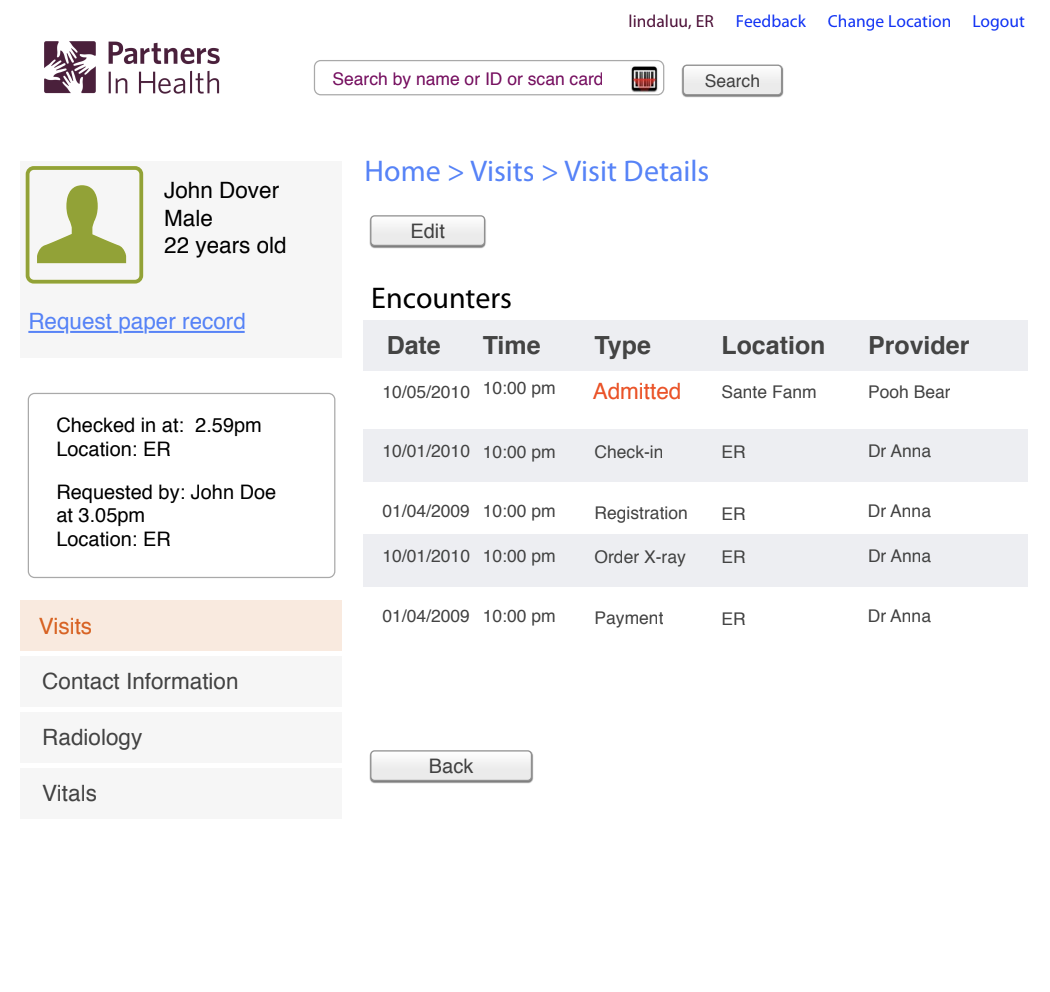

First versions: working prototype alongside low-fidelity mockups to validate concepts quickly.
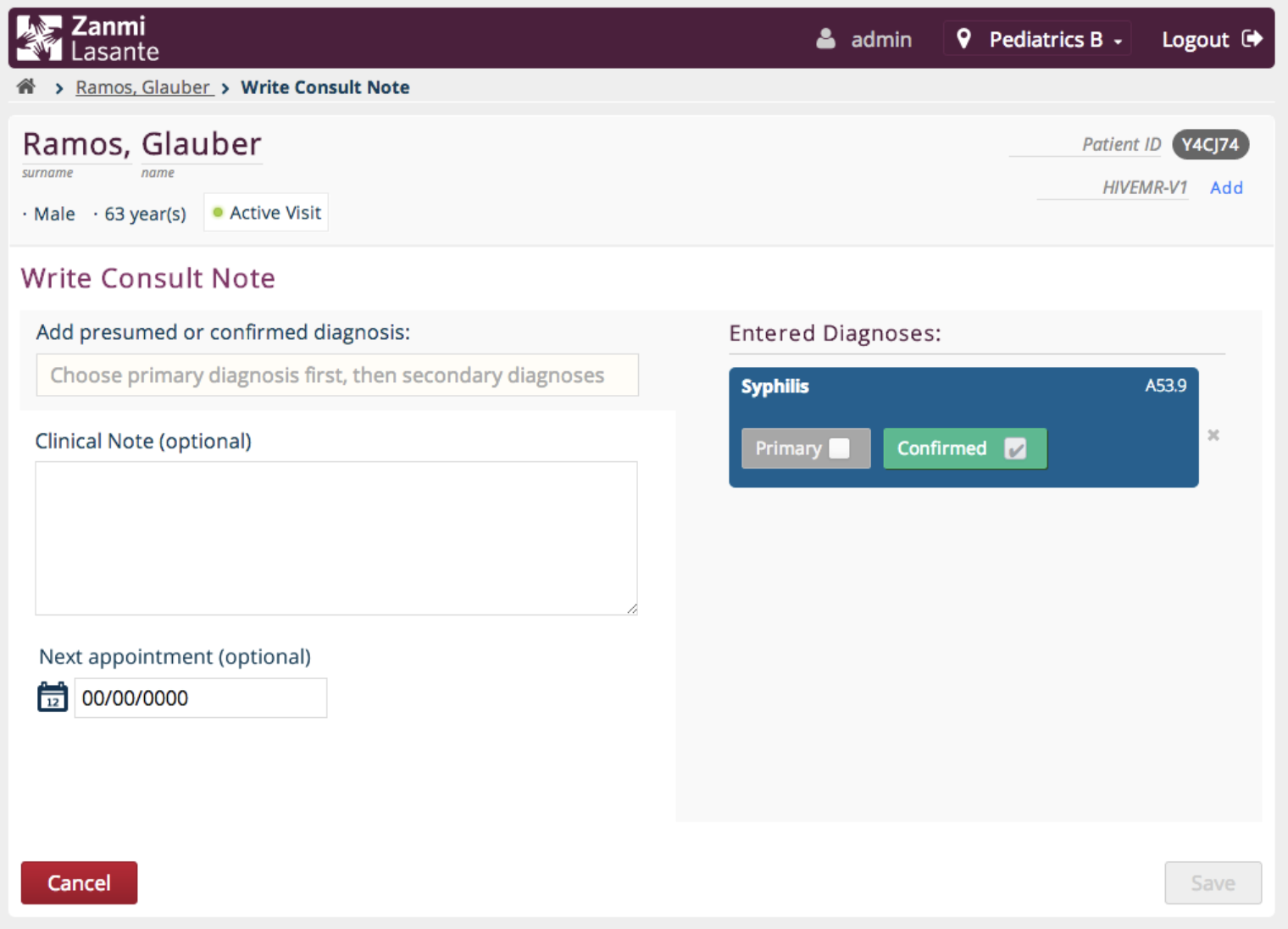
Evolved UI with clearer patient information, actions, and encounter history.
In-Site Testing in Haiti
Once we had working software, we took it to hospital grounds in Haiti to test with actual staff. The hospital was still under construction, but we role-played scenarios and recorded everything. Key discoveries: many participants had never used a computer before, so keyboard navigation (“Enter + number”) was easier to learn than mouse clicks under pressure. We replaced text with intuitive icons and large elements (“look for the heart and click it”). Doctors found the patient dashboard life-saving for surfacing critical data quickly.

Testing in Haiti: validating designs with hospital staff who would use the system daily.
Live Design System
Created a live UI style guide (we were designing in Fireworks at the time, so this was innovative) where developers could copy code directly. This enabled faster delivery, faster demoing to the client, and faster testing with nurses in Haiti.
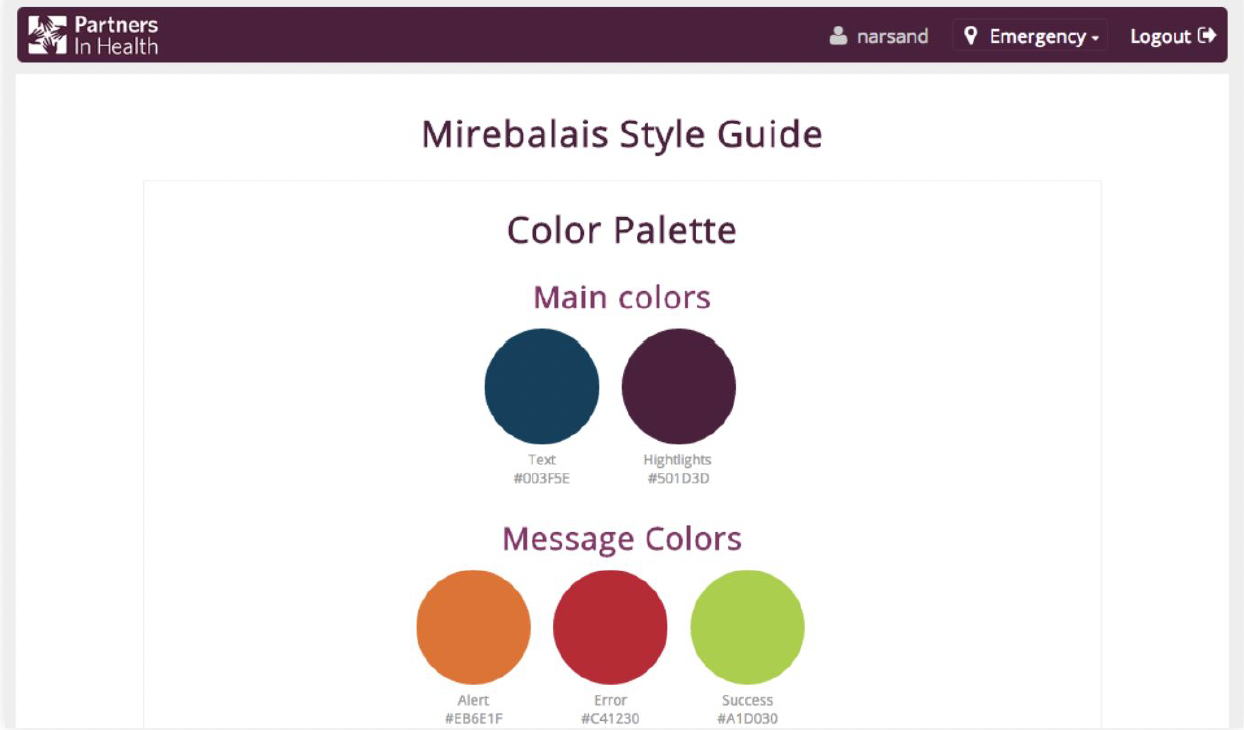
Live style guide: colors, icons, and buttons that developers could reference and copy directly.
Result
Real impact: Helping save lives by surfacing key data faster
- Clinicians worked more efficiently and confidently, even under high pressure
- The system was adopted in real patient care, helping save lives by surfacing critical data faster
- Design changes were so impactful that we were asked to roll them out to the core OpenMRS system
- OpenMRS has evolved since, but this work laid the foundation. The project is still active with a large global community, helping millions access healthcare worldwide

Global impact: OpenMRS with our design improvements being used in healthcare facilities worldwide.