This case study is protected
Enter the password to view this work.
Incorrect password. Try again.
Don't have the password? Request access
Design Operations
Building tools, processes, and shared practices to support a growing design organisation
As Booking.com scaled its design organisation, I helped establish and lead DesignOps initiatives that improved knowledge sharing, onboarding, collaboration, and cross-platform alignment across design, research, and writing disciplines.
UX documentation hub
Information related to UX was scattered across tools, often outdated, duplicated, or hard to locate. This made it difficult for designers, writers, and researchers to find resources needed to work effectively.
Solution: Designed and launched a centralised landing page consolidating key UX resources, from Figma libraries to job descriptions. Improved the internal documentation platform for ease of contribution and readability, and developed a content maintenance plan mapping documentation ownership to ensure accuracy.
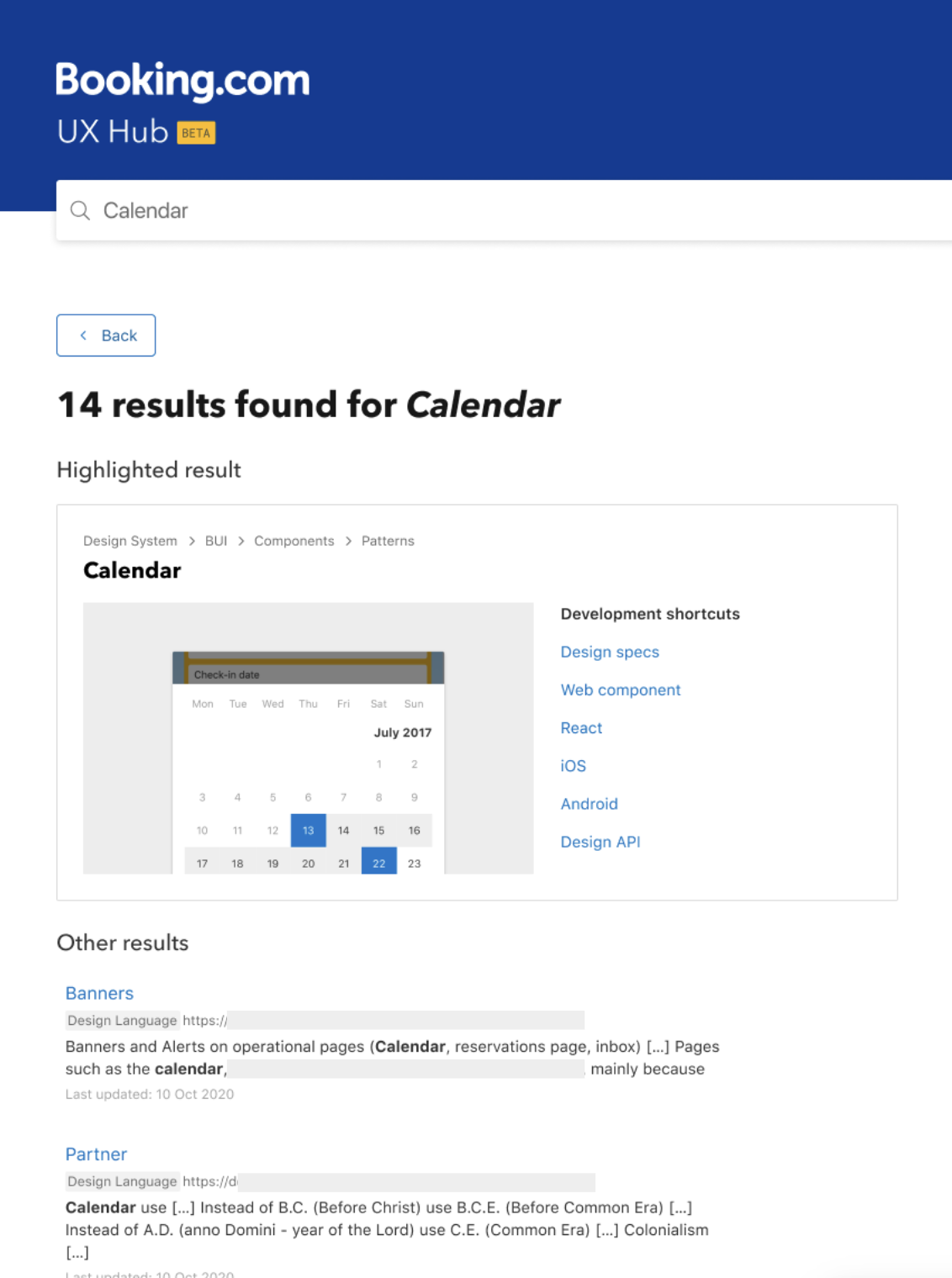
UX Hub interface: centralised documentation portal with navigation, search, and resource categorisation.
UX people directory
There was no reliable way to know who was working on what, or where to find related files and documentation.
Solution: Launched a tool connecting designers and writers across teams, with live links to Figma files and documentation, improving access to active design work across the company.
Review Playbook
Collaboration and quality varied across teams without structured feedback practices.
Solution: Defined adaptable practices for design and writing reviews, helping teams adopt the level of structure that fit their context, supporting scalable feedback loops and cross-functional visibility.
Quarterly UX Updates
The broader UX org needed alignment without relying on Slack noise.
Solution: Created a lightweight format highlighting key projects, cross-platform alignment efforts, and tool changes, keeping teams informed through newsletters and presentations.
Impact
- Made scattered knowledge more accessible and usable
- Helped people understand how to collaborate and who to connect with
- Supported shared ownership of quality, consistency, and alignment
- Improved onboarding and reduced duplication
- Created clarity at scale without adding complexity